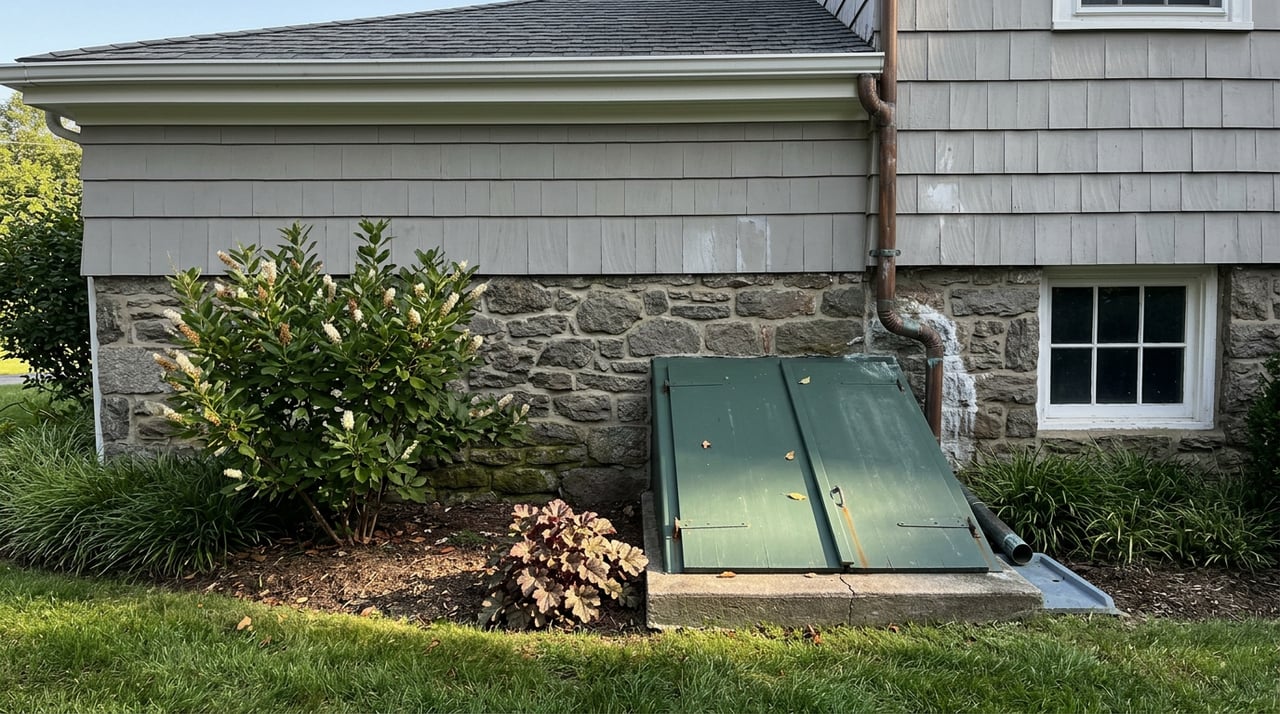
It usually starts the same way. An inspector is fifteen minutes into a two-hundred-year-old colonial or a 1958 ranch, working through the basement, when a pair of old copper lines catches the flashlight at an odd angle. Or someone notices a capped pipe sticking out of the lawn near the foundation, or a patch of grass that never quite greens up the way the rest of the yard does. A magnetic sweep confirms what everyone already suspects. There is a tank buried somewhere on the property, and nobody currently in the house has ever seen it.
In New Canaan, this moment is not rare. It is closer to routine. And the part that actually determines whether a deal survives it has less to do with the tank itself than with something buyers and sellers rarely think about until they are already living it: the mismatch between how fast New Canaan homes move and how slowly buried oil tank issues resolve.
Most of the Town Qualifies
New Canaan's housing stock skews old in a specific way. According to NeighborhoodScout's analysis of the town, 37.82 percent of New Canaan's homes were built between the 1940s and 1960s, and another 18.74 percent predate 1939. Add those together and well over half the town's housing was built before the mid-1980s, the era when underground steel tanks were the standard way to store heating oil and before the industry and state regulators began pushing homeowners toward aboveground alternatives.
This isn't a quirk limited to a handful of antique properties on back roads. It's baked into the statistical center of the town's housing supply. The New Canaan Building Department issues roughly 1,700 permits a year for activity ranging from new construction to what it describes as simple oil tank or furnace replacements, which tells you this is an ordinary, ongoing category of home maintenance here, not an edge case that only shows up in estate sales.
The Contingency Window Was Never Built for This
Here is the part that catches people off guard. A Connecticut purchase contract runs on a short clock. The inspection period is measured in days. The path from accepted offer to closing is measured in weeks. Buried oil tank problems do not resolve on that schedule.
A tank sweep and soil test themselves are quick, usually a single site visit, and the combined cost typically lands in the $500 to $850 range depending on how much soil sampling is involved. That part fits inside almost any inspection contingency. The problem shows up if the test comes back positive for contamination. At that point you are not looking at a quick fix. Removing a leaking tank means draining it, excavating contaminated soil, having a licensed contractor certify the site is clean, and in some cases waiting on lab results before anyone can sign off. According to guidance published for Connecticut buyers and sellers, that process can take weeks or months, not days.
That gap, contingency measured in days versus remediation measured in weeks or months, is the actual friction point. It's also why an oil tank discovered mid-contract does more damage to a deal's timeline than its dollar cost alone would suggest. A buyer with a mortgage commitment deadline, a lease ending, or a job start date doesn't have the luxury of waiting out a remediation timeline that wasn't part of anyone's original plan.
What Connecticut Law Actually Requires
According to Maxim Home Inspections, Connecticut sellers are required to complete a Residential Property Condition Report before a buyer signs a binder or contract, and the form specifically asks whether an underground fuel tank exists, along with its location and age. If a seller fails to provide the report at all, the law sets a fixed penalty, a $300 credit to the buyer at closing, according to the Connecticut Office of Legislative Research. That credit is small, which is exactly why it shouldn't be mistaken for the real exposure.
Many New Canaan sellers have owned their homes for decades without ever having reason to look for a tank that was capped and buried before they bought the property.
The Money, Plainly
For sellers weighing whether to deal with a suspected tank before listing or wait to see if it comes up, the range looks roughly like this:
- Tank sweep and soil testing: $500 to $850
- Removal of a non-leaking tank: $400 to $3,000, with underground removal running toward the higher end due to excavation
- Remediation if the soil tests show contamination: commonly cited in the $20,000 to $100,000-plus range, depending on the extent of the release
Insurance rarely softens this. Most homeowner policies stopped covering legacy buried oil tanks around 2010, and even policies that still address aboveground tanks typically cap cleanup payouts at $10,000 to $25,000, well short of what a serious contamination event can cost. Financing adds another wrinkle. According to Maxwell Home Inspections, FHA and VA loans can require proof that a property is free of contamination before approving a mortgage, which means a tank issue discovered mid-contract can stall not just the closing date but the buyer's ability to close at all.
Why Sequencing Is the Whole Strategy
None of this makes a buried tank a deal killer. It makes timing the entire question. A tank tested and, if necessary, removed before a home goes on the market becomes a closure letter in the listing file, something a buyer's attorney can review in an afternoon instead of a discovery that resets the whole negotiation. A tank left unaddressed until a buyer's inspector finds it becomes exactly the kind of open-ended delay that a fast New Canaan market has little patience for. As of January 2026, Coldwell Banker's New Canaan market tracking showed a median sale price of $3.2 million and average days on market of 91, up sharply from a rapid 38 days the previous month, in a market with only 32 active listings, among the lowest inventory levels the town has recorded. In a market that tight, a seller who can hand a buyer a clean tank closure letter on day one has already removed the single most common reason a strong offer falls apart mid-contract.
Frequently Asked Questions
What do professionals recommend about an oil tank sweep in Connecticut? Most real estate attorneys and environmental professionals in Fairfield County strongly recommend it.
What if I genuinely don't know whether my home has a buried tank? An "unknown" answer doesn't substitute for testing. Older New Canaan homes sometimes have a capped fill pipe hidden by landscaping decades after the last delivery, with no one currently living there aware it exists.
Can a home with a known underground tank still sell? Yes. A tank that is properly decommissioned, tested, and documented with a closure letter tends to sell without friction. It's tanks with unknown status or undocumented history that create the longest delays.
If you're weighing whether to test or remove a tank before listing a New Canaan home, or you're under contract on one and want a clear read on what the timeline actually looks like, The Rosato Team can walk through the sequencing with you. Get Your Home Valuation and let's talk through what your specific property and timeline need.
This article is general information, not legal, tax or financial advice. Consult a qualified professional about your situation.